



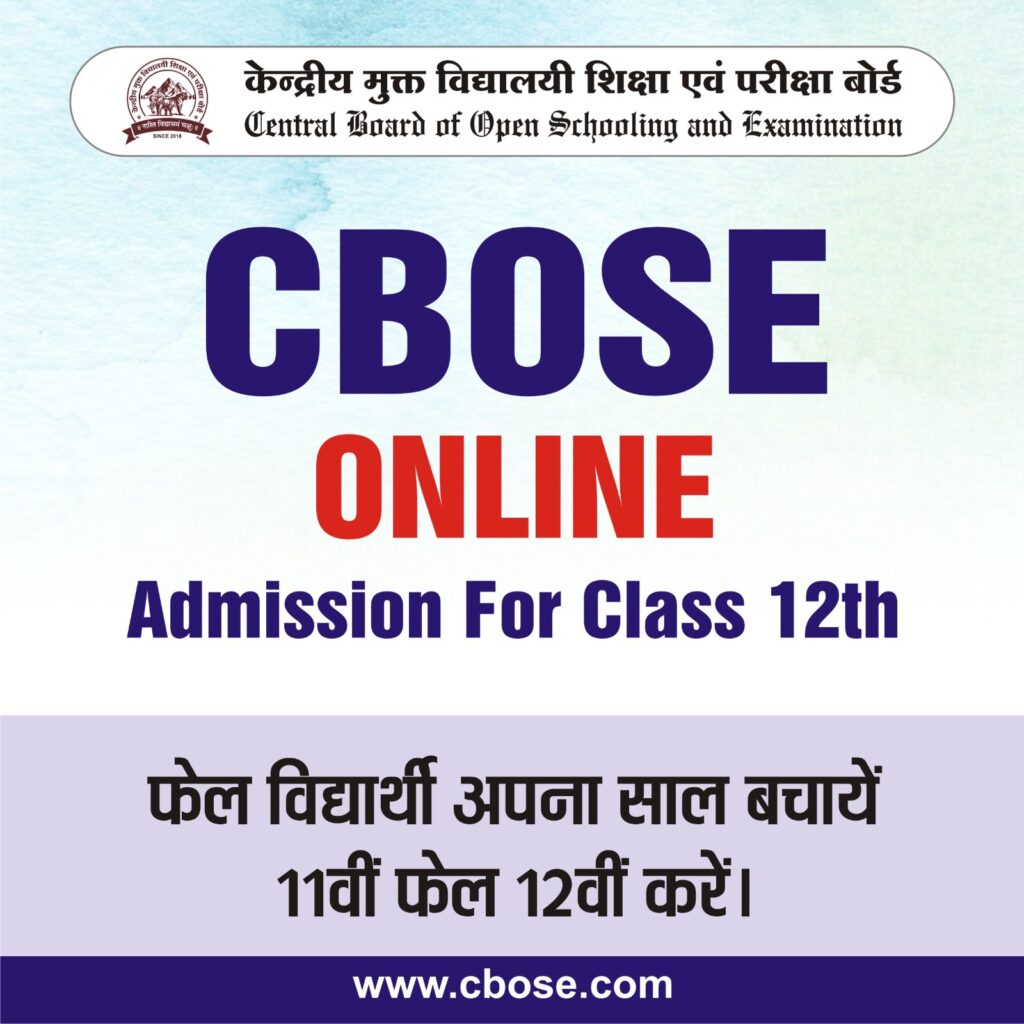
The Central Board of Open Schooling and Examination (CBOSE) is an autonomous open schooling education board of India, established to promote flexible, inclusive and learner-oriented school education. The Board has been constituted with the objective of expanding access to secondary and senior secondary education for learners who are unable to pursue education through the conventional schooling system.
CBOSE functions as an alternative open schooling framework, focusing on academic flexibility, learner choice and accessibility. The Board has been developed to support school dropouts, working learners, adult students and learners from geographically remote or socially disadvantaged backgrounds. It aligns its academic vision with the broader principles of the National Education Policy, emphasizing equity, lifelong learning and inclusive education.
On the occasion of India’s ongoing education reforms, the establishment of the Central Board of Open Schooling and Examination represents an effort to strengthen alternative learning pathways within the national education ecosystem. The Board aims to ensure that education remains accessible beyond the boundaries of age, location and socio-economic limitations. Through its open and distance learning model, CBOSE seeks to empower learners with opportunities for academic progression, skill development and personal growth, contributing to the goal of a more inclusive and educated society.
Infobox (Wikipedia Style)
Central Board of Open Schooling and Examination
- Type: Open Schooling Education Board
- Established: 2021
- Country: India
- Mode of education: Open and Distance Learning
- Levels offered: Secondary (Class 10), Senior Secondary (Class 12)
- Focus: Flexible, inclusive and lifelong learning
- Language(s): English, Hindi
- Affiliation model: Open schooling framework
- Website: www.cbose.com
History
Establishment and Background
The Central Board of Open Schooling and Examination was conceptualised in response to the growing need for alternative and flexible education systems in India. A significant section of learners, including school dropouts, working individuals and adult learners, required an education framework that could accommodate diverse learning needs beyond the conventional school structure.
The idea behind CBOSE was to strengthen open schooling as a parallel academic pathway while ensuring academic credibility, structured examinations and learner support mechanisms. The Board was designed to operate in alignment with national education reforms aimed at widening access to education and promoting lifelong learning.
Institutional Development
During its formation phase, the Central Board of Open Schooling and Examination focused on developing academic standards suitable for open and distance learning. Emphasis was placed on flexibility in subject selection, learner-centric study models and transparent examination processes. The Board was structured to complement existing school boards by offering an alternative route for learners seeking academic continuity.
CBOSE has been positioned as part of the broader open schooling ecosystem in India, contributing to inclusive education goals and addressing educational discontinuity among disadvantaged and non-traditional learners.
Role in Open Schooling
The Board undertakes responsibilities related to curriculum framework development, assessment systems and certification within the open schooling model. Its approach focuses on accessibility, academic equity and recognition of learner achievement, supporting national objectives related to education for all and human resource development.
Examinations and Assessments
The Central Board of Open Schooling and Examination conducts secondary and senior secondary level examinations periodically in accordance with its open schooling framework. Examinations are organised through a structured assessment system designed to provide flexibility to learners while maintaining academic standards. Results are declared after due evaluation within the notified timelines.
In addition to academic examinations, CBOSE facilitates assessment models suitable for open and distance learning, allowing learners to appear in examinations based on eligibility and programme requirements. The Board places emphasis on transparency, learner convenience and fair evaluation practices.
Academic Flexibility and Reforms
CBOSE follows a learner-centric approach by offering flexible examination opportunities suited to diverse learner profiles, including working individuals and adult learners. The Board continuously reviews its academic and examination processes in line with evolving education policies and learner needs.
In response to broader education reforms and post-pandemic academic considerations, the Board has focused on streamlining curriculum delivery and assessment methods to reduce academic stress while ensuring learning continuity.
Role in the Examination Ecosystem
As part of India’s open schooling ecosystem, the Central Board of Open Schooling and Examination contributes to widening access to school-level certification through alternative learning pathways. The Board complements mainstream education systems by offering structured assessments, certification and academic recognition within the open schooling model.
Advantages and Disadvantages of CBOSE (Open) Board
Advantages
The Central Board of Open Schooling and Examination offers flexible learning opportunities for students who are unable to pursue education through conventional schooling systems. Its open schooling model allows learners to continue education irrespective of age, location or employment status.
CBOSE provides an alternative academic pathway for school dropouts, working learners and adult students, helping them complete secondary and senior secondary education. The Board’s learner-centric structure enables flexibility in subject selection and examination scheduling, which is particularly beneficial for non-traditional learners.
The open and distance learning framework adopted by CBOSE supports inclusive education by reaching learners in remote or underserved regions. It also promotes lifelong learning by allowing individuals to re-enter the education system at different stages of life.
Disadvantages
One of the commonly cited limitations of open schooling boards such as CBOSE is comparatively lower public awareness when compared to long-established school boards. Recognition and acceptance may vary across institutions, employers or regions depending on local policies and requirements.
The absence of a regular classroom environment may limit peer interaction and structured academic engagement for some learners. Students enrolled under open schooling systems are often required to maintain a higher level of self-discipline and independent study skills.
Additionally, learners may face challenges related to access to study centres, academic guidance or counselling support, particularly in regions where open schooling infrastructure is still developing.